




Preparing Your Home for Autumn and Winter: Energy-Efficient Window Coverings
The first chilly evening often reveals which rooms struggle to hold their warmth. Perhaps your living room feels colder beside the windows, or your bedroom loses its cosy feel soon after the heating switches off. Whether you are preparing in autumn or already feeling winter’s chill, your window coverings deserve a closer look.
Energy-efficient blinds and lined curtains can help reduce heat loss through windows, making them a useful part of a more comfortable home. The right choice depends on the fabric, construction, fit and how you use them throughout the day. Energy Saving Trust includes heavy thermal curtains among the options for improving the energy efficiency of existing windows.
Start with the room that feels coldest
Before choosing a colour or fabric, think about where you notice the cold most. A sofa beside a bay window, a desk facing large panes of glass or a bedroom with older sash windows can be sensible places to start.
Look at the window itself, too. If you can feel air coming through gaps around the frame, window coverings should form part of the solution alongside suitable repairs or draught-proofing. Covering a draughty window does not repair its seals. Historic Environment Scotland recommends keeping traditional windows in good repair and addressing draughts to improve comfort.
This helps you make a more useful decision: are you looking for additional insulation, better evening coverage, easier operation, or a combination of all three?
What makes blinds energy efficient?
Thermal blinds and insulated blinds are terms commonly used for coverings designed to improve insulation at the window. However, two products carrying similar descriptions may have different constructions.
Cellular or honeycomb blinds contain pockets of air within their structure. These help resist heat transfer, making them worth considering when winter comfort is a priority. Research from Oak Ridge National Laboratory found that the cellular shades tested offered better winter energy performance than generic Venetian blinds. Results for an individual home will depend on the product, windows and conditions.
When comparing fabrics, ask what provides the thermal benefit. Is it a cellular structure, a particular lining or a tested combination of materials? A blackout description tells you about light control; ask separately about insulation rather than assuming the two are interchangeable.
Fit also deserves attention. Discuss how the blind will cover the glazing, where operating clearances are needed and whether handles or unusual window shapes affect the installation.
Comparing window coverings for colder months
The most suitable covering should balance warmth with daylight, access and the way you use each room.
| Window covering | Main advantage | Trade-off to consider | What to discuss before ordering |
|---|---|---|---|
| Cellular or honeycomb blinds | Their air pockets provide an insulating structure | Full closure reduces daylight and the view | Fabric construction, fit and motorisation compatibility |
| Thermal roller blinds | A simple appearance with fabric options intended to improve thermal comfort | Performance varies between fabrics and fitting arrangements | Evidence supporting the fabric’s thermal claims and coverage around the window |
| Thermally lined curtains | Additional coverage with a soft, comfortable finish | Bulky curtains need space and should not obstruct radiators | Lining, curtain length, overlap and track position |
| Motorised blinds | Make regular opening and closing easier, particularly across several windows | The motor itself does not improve the fabric’s insulation | Blind specification, power supply and available controls |
| Lined curtains on a motorised track | Combine curtain coverage with convenient operation | Track and motor selection must suit the curtain weight and layout | Heading style, opening direction and total curtain weight |
The key is to choose the insulating covering and its controls together. Convenient operation is valuable, but it should support a suitable fabric and installation.
Give your windows a daytime and evening routine
Keeping your blinds closed all winter can mean missing useful daylight and warmth from the sun. On sunny days, open coverings where sunlight reaches the room, then close them as daylight fades. Citizens Advice recommends opening curtains and blinds during the day to admit solar warmth and closing them when it gets dark to help retain heat.
Consider each room separately. A sunny living room may benefit from open blinds during the afternoon, while a street-facing bedroom may need more privacy. Your home does not need one identical setting across every window.
If you already have suitable coverings, adjusting this daily routine is something you can start immediately, even while planning a larger upgrade.
How motorised blinds can support your winter routine
Closing several blinds every evening is easy to overlook, especially when you arrive home after dark. High windows, roof glazing and furniture in front of windows can make the task less convenient.
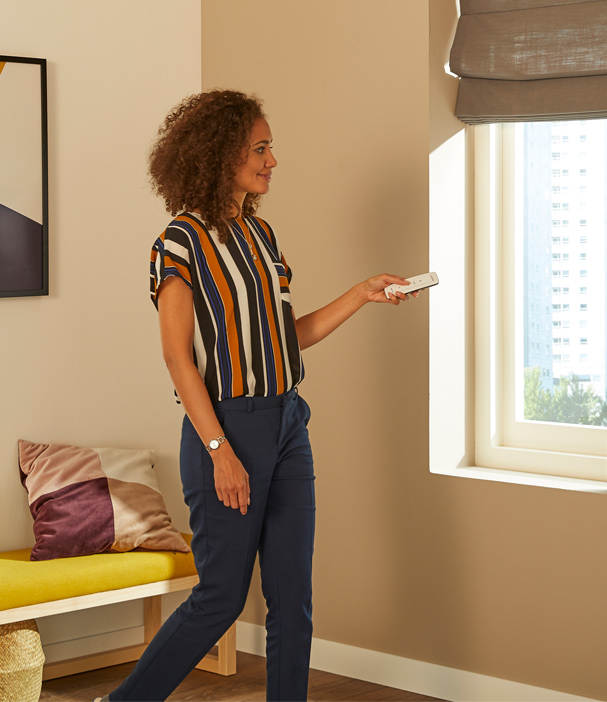
Our motorised blinds offer options for remote operation, grouped control and compatible smart-home integration. Depending on the system selected, timers can help your blinds follow a regular opening and closing routine. Battery- and mains-powered options also allow different approaches for existing rooms and renovation projects.
For example, you could arrange for living-room blinds to close before you return from work. Review the timing as the days shorten so that it continues to suit your home.
When discussing motorised thermal blinds, ask which controls require an additional hub and how charging or electrical access will work. These practical details help you choose a system you will enjoy using throughout the year.
Prefer curtains? Consider the lining and the track
Curtains can be a good choice when you want generous coverage and a softer finish around large windows. For winter use, pay attention to the lining and installation as well as the decorative fabric.
Keep radiators clear so their warmth can circulate into the room. Energy Saving Trust specifically advises against allowing curtains to block radiators, even when choosing thick or thermally lined fabrics.
A motorised curtain track makes opening and closing larger curtains more convenient. Our range includes Somfy systems with remote control and compatible TaHoma connectivity, with the motor and track selected to suit the curtain arrangement.
This is particularly worth discussing when planning wide curtains that you want to operate together each evening.
Keep ventilation in your winter plans
A warmer room still needs appropriate ventilation. Keep intended ventilation openings clear, and do not treat blinds or curtains as a remedy for persistent condensation. Energy Saving Trust advises keeping window trickle ventilators open and investigating moisture building up on internal windows or walls.
Make opening the coverings and checking the glass part of your morning routine. It is a useful opportunity to spot moisture that might otherwise remain hidden behind closed fabric.
Choose expert advice alongside the right product
A consultation should cover more than appearance. Window dimensions, thermal fabric options, curtain weight, power supplies and control compatibility all influence the finished result.
At London Interior Blinds, our BBSA membership reflects our commitment to training, child safety and industry best practice. We are also a Somfy accredited expert dealer, providing advice on suitable motorised solutions. These credentials support your choice of supplier; thermal performance should still be assessed for the specific covering you choose.
Whether you are considering insulated blinds for a cold bedroom or motorised curtains for a large living-room window, start with the space that needs the most attention. Book a free consultation to explore window coverings that suit your home, your routine and the colder months ahead.